
Quality control is most useful when it prevents a bad batch from moving forward, not when it produces a thick report after the container has sailed. A practical beer sampling plan follows the product from raw materials and wort to fermentation, packaging and finished cases. It also states what happens when a result is late, unusual or outside specification.
This guide is for importers who want to understand a brewery’s release system and for factories building a clear, repeatable inspection routine.
Contents
1. Start with Risk
Not every test needs to be performed at every stage. Rank risks by severity, likelihood and ability to detect. A contamination risk, a wrong ingredient declaration and a fill-volume issue require different controls, but each needs a defined decision owner.
Write the specification in a way operators can use: target, acceptable range, method, sample size, frequency and action. “Check quality” is not a method.
2. Choose Sampling Points
A balanced plan may include:
- Incoming water, malt, hops, yeast and packaging materials;
- Wort after the brewhouse;
- Fermentation trend and terminal beer;
- After clarification, filtration or pasteurization;
- Packaging start, middle and end;
- Finished cases from multiple pallets.
Sampling at the start and end of a run catches drift that a single middle-of-run sample can miss. For a long packaging shift or format change, add a sample after the changeover.
3. Match Method to Decision
Use a rapid in-process method when the decision is “can this tank move to the next stage?” Use a validated laboratory method when the decision is “can this lot be released to a customer?” Record units and reference methods so two laboratories do not produce numbers that cannot be compared.
Trend results over time. A result within range but moving steadily toward a limit deserves attention before it becomes a failure.
4. Sample the Package
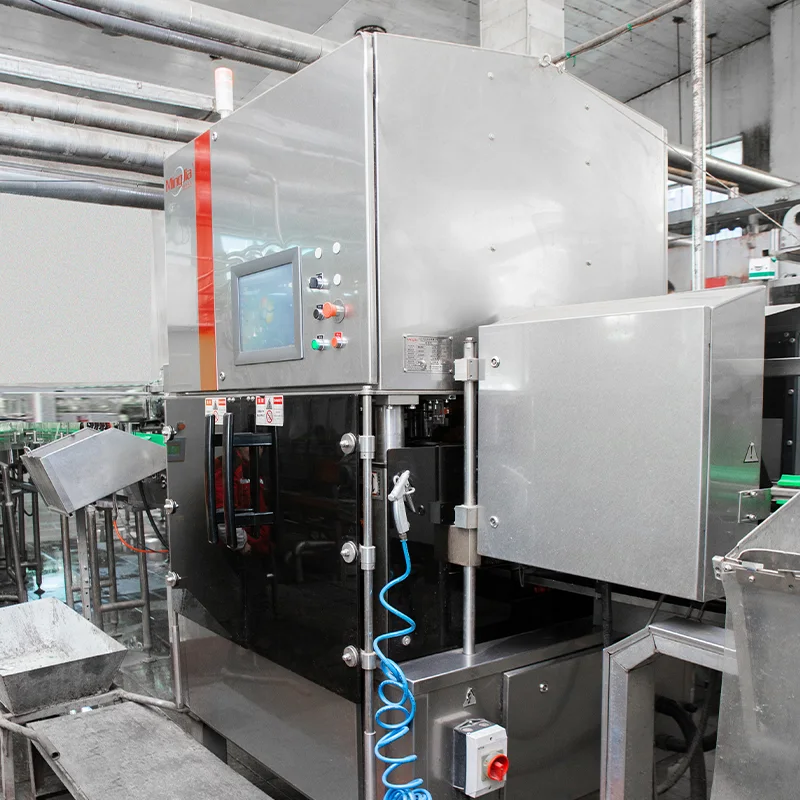
Finished-package sampling should cover fill volume, closure or seam integrity, appearance, code legibility, package count, carbonation where relevant, sensory condition and microbiological release requirements. Include cases from different pallets and record the lot.
When a defect appears, isolate the smallest defensible scope. If the cause is a label-roll splice, one pallet may be affected; if it is a tank issue, the scope may be much wider. Good lot records make that decision possible.
5. Make Records Traceable
Every record should identify product, lot, date, sample point, method, result, specification revision, person performing the test and reviewer decision. Keep instrument or laboratory references where they matter. The buyer should receive a certificate of analysis that points back to this system.
For an importer, traceability also connects the lot to the container, invoice, packing list and customer. The beer COA batch-release guide explains how the document is used at the receiving end.
6. Handle Out-of-Spec Results
An out-of-spec result is a decision point, not automatically a shipment cancellation. Stop movement of the affected material, confirm the result, identify the scope, investigate the cause and document the disposition. Possible outcomes include rework, relabeling, concession with written approval, extended testing or rejection.
Never replace a failed result with a new sample simply because the new sample is convenient. Retesting should follow a defined rule and preserve the original result.
7. Build the Release File
- Approved product specification and artwork revision;
- Lot identity, production dates and best-before date;
- Final analysis and sensory approval;
- Packaging and count checks;
- Deviation, concession or rework record if applicable;
- Container and pallet references;
- Authorized release decision.
This file is valuable months later, when a distributor asks a question or a customer reports a package issue. It also gives a brewery a factual basis for improving the next batch.
Example Control-Plan Format
For a pale lager, a control plan might list wort gravity after brewing, fermentation gravity at a defined interval, final pH, sensory approval before filtration, package fill at line start/middle/end, seam or closure checks, code readability and finished-case count. Each row should state the method, frequency, responsible person and reaction plan.
The reaction plan is the part most often omitted. Write “stop, isolate, verify and notify” when a result is outside the limit, then define who can release or reject the affected material. A clear reaction plan protects both the importer and the factory from quietly shipping a questionable lot.
Review Trends, Not Only Failures
A good QC meeting looks at the last several batches. Plot final gravity, pH, fill volume, seam results, microbiology and sensory comments against their specifications. A result can be technically acceptable and still show drift. Early discussion is cheaper than investigating a customer complaint.
Invite production and sales to the review when a trend could affect the market. If a package change, ingredient substitution or new route is planned, mark it on the trend chart. This creates a practical connection between factory evidence and the decisions made by the commercial team.
8. FAQs
Does every importer need its own laboratory?
No. Many importers use the manufacturer’s qualified laboratory and independent testing when the risk or regulation justifies it. The important point is that methods, competence and lot identity are clear.
How large should a sample be?
Use the risk, product, test method and customer requirement to set the sample size. A fixed number copied across all products is rarely optimal.
What makes a COA credible?
Clear lot identity, defined methods, units, specification limits, authorized review and consistency with the finished package. A logo alone is not a quality system.